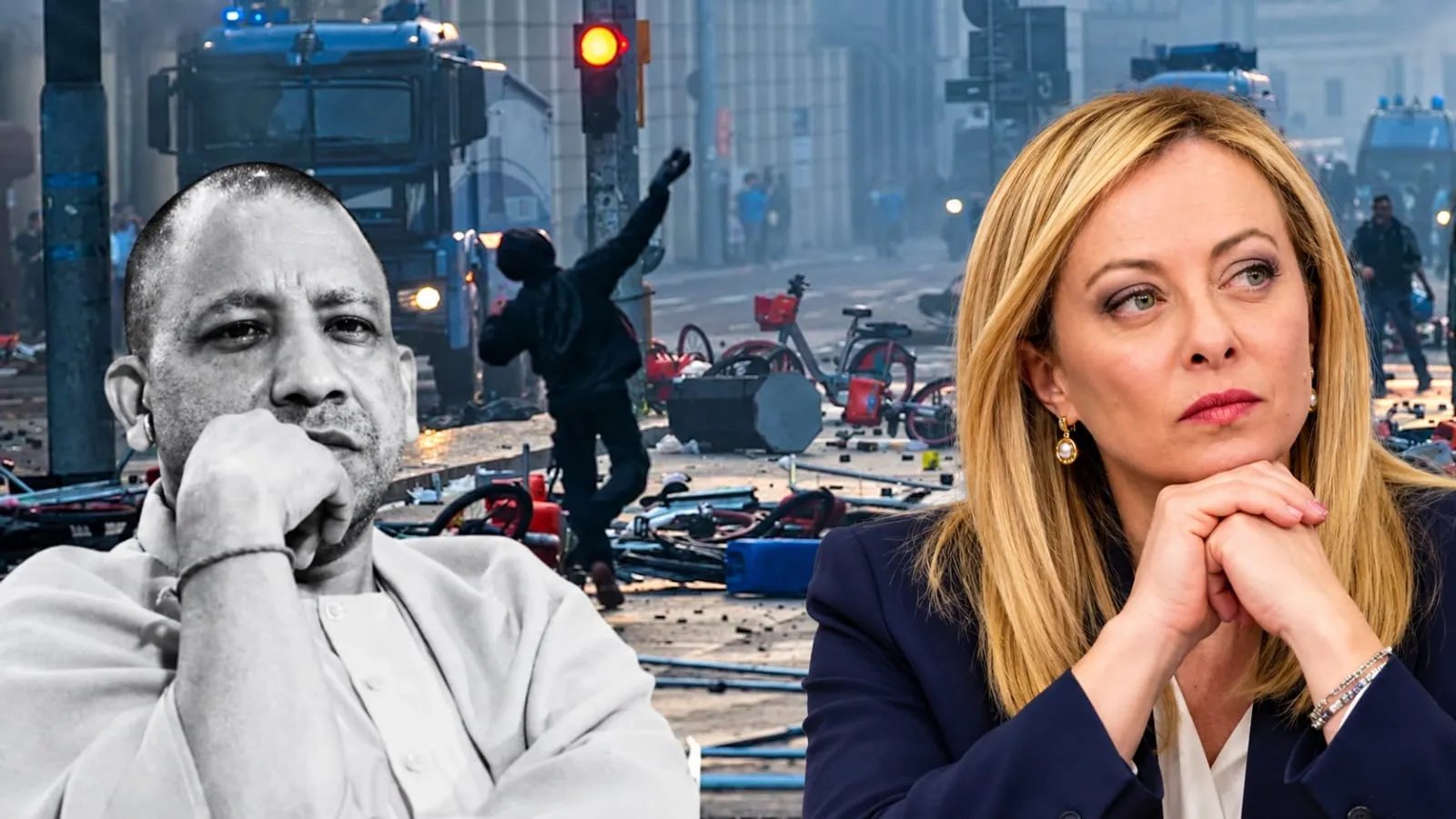
Italian Prime Minister Giorgia Meloni has announced tougher measures against violence, looting and damage to public property during protests. The proposed measures could lead to prison sentences of up to five years and fines of up to €20,000 in certain cases. The government is also focusing on making people responsible for the damage caused during violent demonstrations. The move has drawn comparisons with Uttar Pradesh Chief Minister Yogi Adityanath’s policy of recovering compensation from those responsible for damaging property during riots and protests. However, the legal frameworks in Italy and Uttar Pradesh are not identical.
Violent Protests Raise Security Concerns
The Italian government’s decision comes amid reports of violent clashes between protesters and police in Milan. The incidents reportedly involved looting, vandalism and attacks on security personnel. Speaking after a cabinet meeting on October 20, Meloni said that breaking shop windows, looting businesses and attacking police officers could not be justified in the name of protest. According to reports, around 200 security personnel were injured during the unrest, while business organisations estimated property damage at approximately €1 million.
Parents Could Face Financial Responsibility
One of the key aspects of the proposed measures concerns damage caused by minors. Under the reported provisions, parents could be held financially responsible when their children damage public or private property. Authorities may issue compensation orders for damage to public property, while owners of private property could seek compensation through the courts. The proposal aims to strengthen accountability and discourage vandalism. Its implementation and application would depend on the final legal provisions and the circumstances of each case.
Additional Security Measures Under Consideration
The Italian government is also reportedly considering stronger security arrangements to prevent further violence. Plans include deploying an additional 500 soldiers in Milan by the end of the year. The use of biometric technology and artificial intelligence to identify people involved in violent protests has also been mentioned in reports. These measures reflect the government’s efforts to improve public security and identify individuals suspected of participating in criminal acts during demonstrations.
Why Yogi Adityanath’s Policy Is Being Compared
The developments have brought attention to Uttar Pradesh’s property damage compensation framework, introduced under the Yogi Adityanath government in 2020. The system provides a legal process to assess damage caused during riots and protests and seek compensation from those held responsible. Claims tribunals were established in Lucknow and Meerut to deal with such cases. The policy attracted considerable attention when it was introduced, particularly because it focused on recovering the cost of damaged public and private property rather than leaving the financial burden entirely on victims or the government.
Similar Objective, Different Legal Frameworks
Italy’s reported measures and Uttar Pradesh’s framework share a focus on accountability for property damage, but they are not the same. Italy’s proposals also address criminal penalties for certain forms of protest-related violence, parental financial responsibility and additional security arrangements. Uttar Pradesh’s system centres on assessing damage and recovering compensation through a legal process. The comparison has renewed debate over how governments should respond to violent demonstrations while protecting public safety and property rights.