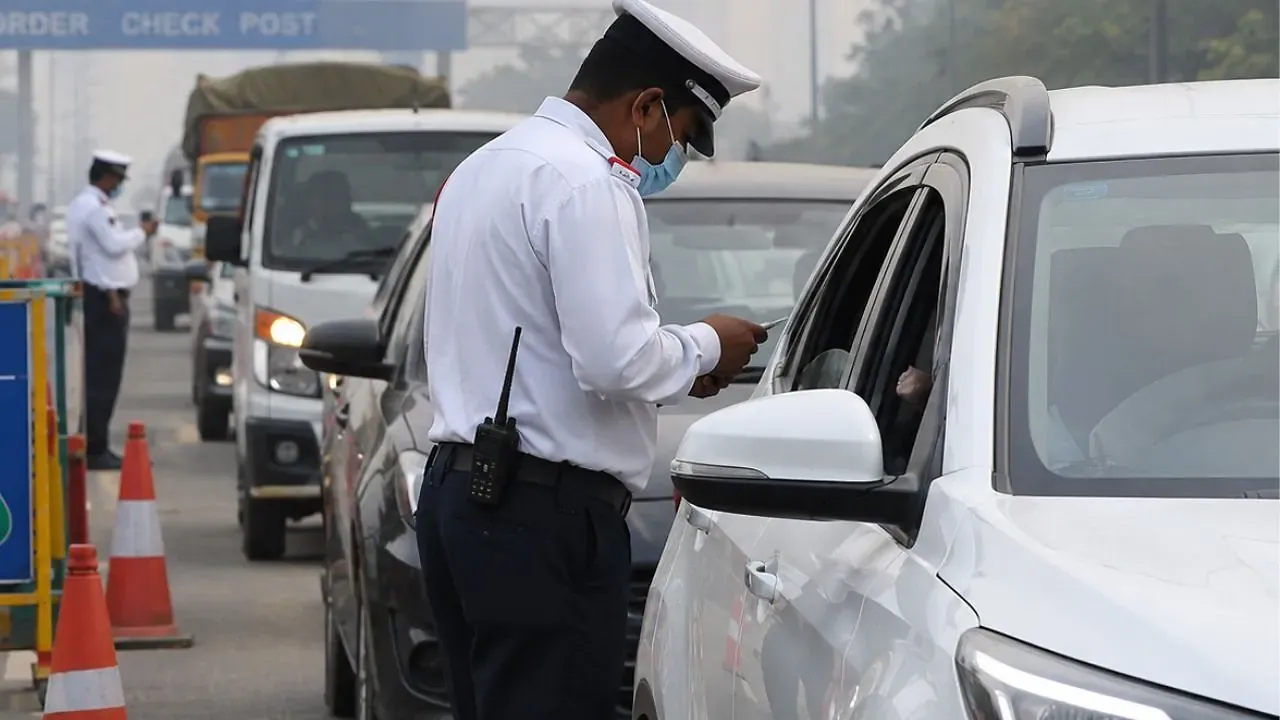
The Delhi Traffic Police has decided to strengthen vehicle checks at the city’s borders as part of efforts to control air pollution under Stage I of the Graded Response Action Plan (GRAP). The decision was discussed at an inter-state coordination meeting held on Thursday, chaired by Special Commissioner of Police (Traffic) Ajay Chaudhary. Officials from neighbouring states, police departments and civic agencies participated in the meeting, focusing on vehicle entry restrictions, border enforcement and coordinated action across Delhi-NCR. Authorities stressed that directions issued by the Commission for Air Quality Management (CAQM) must be implemented within the prescribed timelines.
Non-Compliant Buses to Be Diverted at Delhi Borders
Officials emphasised that inter-city and inter-state buses failing to meet the prescribed emission standards should be diverted at Delhi’s borders rather than stopped after entering the city. Under the applicable directions, buses operating on electricity, compressed natural gas (CNG) and BS-VI diesel will be permitted, subject to the relevant conditions. Authorities noted that stopping non-compliant buses inside Delhi could contribute to traffic congestion and worsen pollution. The meeting also reviewed restrictions on vehicles registered outside Delhi, scheduled to remain in force from November 1, 2026, to January 31, 2027, subject to notified exemptions. Officials discussed installing prominent signboards at border points and deploying joint enforcement teams to inform commuters about entry restrictions and ensure compliance.
Action Against Overloaded Vehicles and Violations
The meeting also focused on enforcing no-entry timings, checking overloaded and non-destined vehicles, and taking action against vehicles transporting construction and demolition (C&D) material in violation of prescribed rules. Officials stressed that vehicles not legally permitted to operate in Delhi must not be allowed to enter in breach of the applicable restrictions. Vehicle owners were also advised to keep valid Pollution Under Control Certificates (PUCC), wherever required. To improve coordination, authorities decided to establish a dedicated WhatsApp group for sharing instructions, exchanging real-time updates and monitoring enforcement action by different departments. The meeting also highlighted the need to raise public awareness about GRAP measures and vehicle entry rules. Ajay Chaudhary said controlling air pollution was a collective responsibility and directed agencies to maintain proper records of the measures implemented for monitoring and follow-up.
Delhi Traffic Police to Tighten Border Checks Under GRAP Stage 1 to Curb Pollution
TheFearless
22 Oct 2026 · 11:09 PM IST
Related Stories