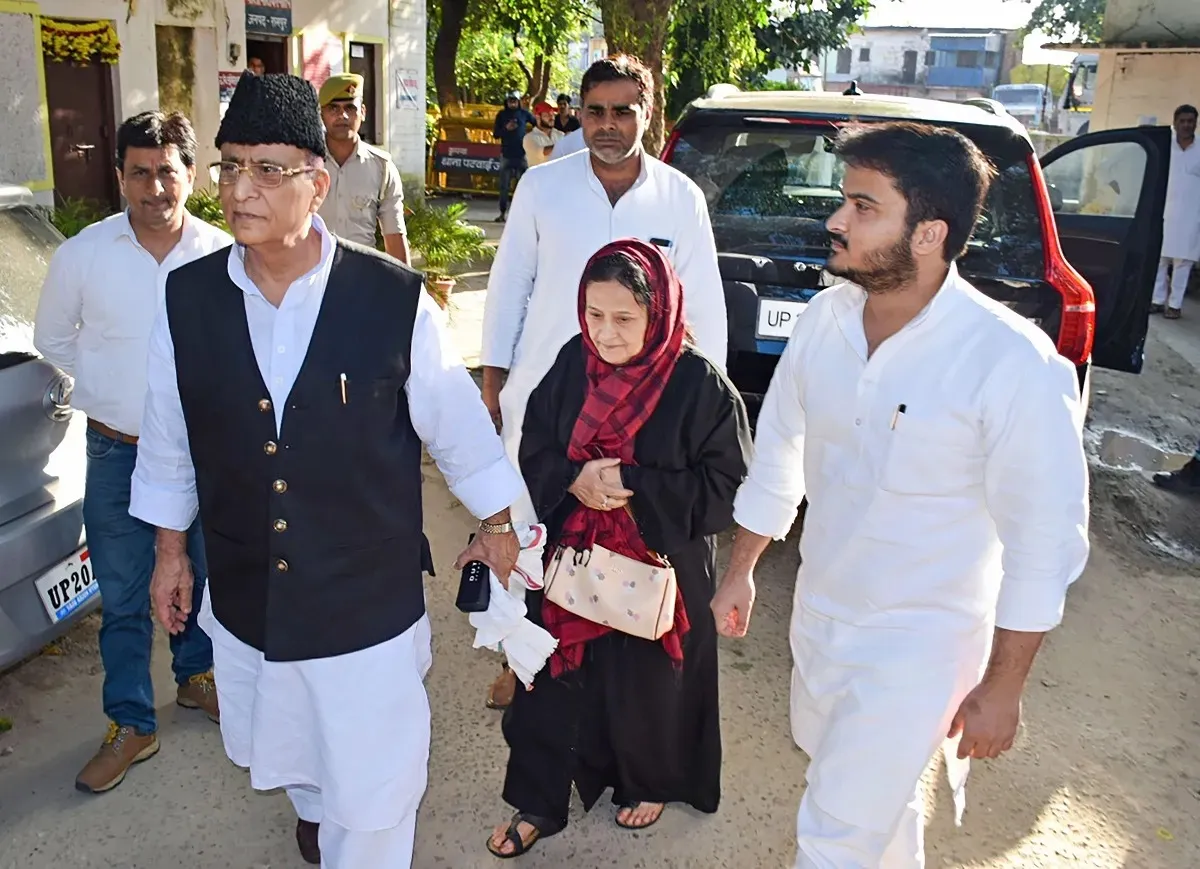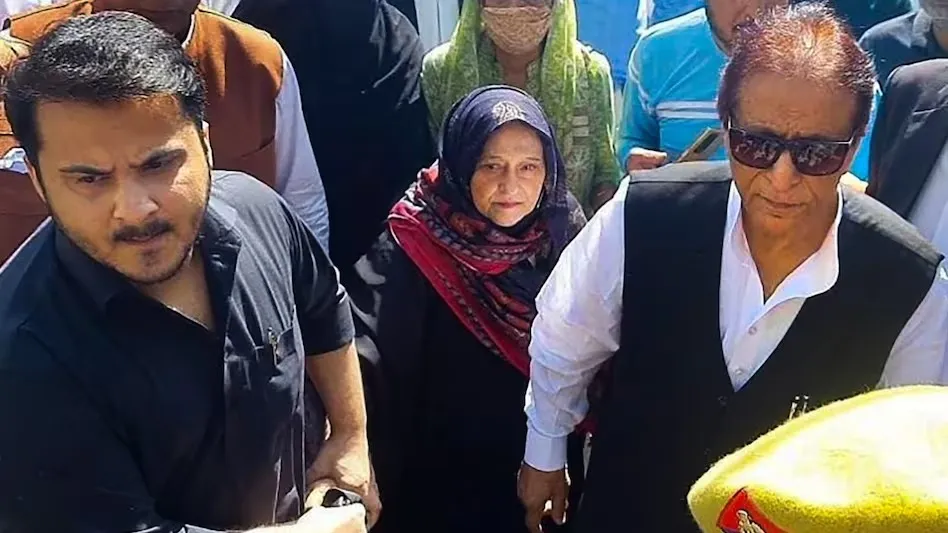
Samajwadi Party leader Azam Khan and his younger son Abdullah Azam may not be able to contest the 2027 Uttar Pradesh Assembly elections, even if they remain out of jail. Their convictions in other cases continue to create legal obstacles. In this situation, Azam Khan’s wife and former MP, Dr Tazeen Fatma, could take charge of the family’s political legacy in Rampur. Recent court relief has strengthened the possibility of her return to electoral politics.
Relief in Court Cases
The Supreme Court on November 17 dismissed the Uttar Pradesh government’s plea in the birth certificate case, allowing the relief earlier granted to Azam Khan and Abdullah Azam to remain in place. Abdullah is already out on bail, while Azam Khan has also received interim bail from the Allahabad High Court. In the two PAN card cases, the High Court suspended their sentences but refused to stay their convictions. This distinction is important because suspension of a sentence does not automatically restore their eligibility to contest elections.
Why They Cannot Contest
Under Section 8(3) of the Representation of the People Act, 1951, a person sentenced to imprisonment for at least two years is disqualified from contesting elections during the sentence and for six years after release. Azam Khan lost his Assembly membership in 2022 following his conviction in a hate speech case and remains disqualified until 2028. Abdullah Azam’s membership was cancelled in 2023, keeping him out of electoral politics until 2029. Unless courts grant relief in their other conviction-related cases, neither father nor son will be eligible to contest the 2027 Assembly elections.
Tazeen Fatma’s Political Return
Tazeen Fatma could now become the family’s main electoral face. She had also received a seven-year sentence in the fake PAN card case, but the Allahabad High Court has stayed that conviction-related sentence, removing the immediate legal hurdle to her contesting an election. She has previously served as an MLA from Rampur and as a Rajya Sabha MP. Her political experience and acceptance among Azam Khan’s supporters could make her an important choice for the Samajwadi Party. However, her candidature will depend on the party’s decision and the family’s political strategy.
Role of Other Family Members
The discussion around the family’s political future also includes Azam Khan’s elder son, Adeeb Azam, and daughter-in-law Sidra Adeeb. Abdullah has already established himself in electoral politics, having been elected twice from the Swar Assembly seat. Adeeb, however, has largely stayed away from active electoral politics and is associated with the family’s social and institutional work, including links with the Jauhar Trust. Sidra reportedly helped maintain contact with party workers in Rampur when several family members were in jail, but there has been no clear announcement about her entering electoral politics.
Rampur’s Political Challenge
The Samajwadi Party faces the challenge of keeping Azam Khan’s supporters united as the BJP has strengthened its position in Rampur. The 2027 election will test whether the family can regain its earlier political influence. Akhilesh Yadav also has a stake in keeping the party’s support base in the region intact. Azam Khan and Abdullah may still influence the campaign from behind the scenes if they remain outside jail. Tazeen Fatma could become the family’s public political face, but the final decision on who leads the campaign remains to be seen.